Qorikancha: Exploring Cusco’s Golden Temple

Peru is a land steeped in ancient history and rich cultural narratives, painted over a canvas of mesmerizing landscapes. At the heart of this country, shimmering in the historic city of Cusco, stands a testament to the grandeur of the past and the resilient threads of culture – the Qorikancha, known as the ‘Golden Temple.’ Synonymous with opulence and spirituality, the Qorikancha, also spelled Coricancha, was once the most important sanctuary dedicated to the Sun God, Inti, in the Inca Empire. Now, it silently narrates tales of a time when its walls were sheathed in gold, embodying divine reverence and imperial pride.

This article aims to explore the intriguing past of Qorikancha, unravel its architecture and unique construction techniques, and shed light on the cultural and historical significance that this monument has held in Peruvian history. From its golden age during the Inca Empire to the cultural amalgamation post Spanish conquest, every chapter of Qorikancha’s story offers a deeper understanding of the complex tapestry of Peru’s past. By delving into the heart of Qorikancha, we uncover not only the mysteries of the temple but also the enduring impact it has had on the Peruvian people, their heritage, and identity. Join us on this journey, as we step into the past, seeking to discover the lasting legacy of Cusco’s Golden Temple.

The gleaming splendor of the past: Understanding Qorikancha’s historical context

Qorikancha was the crown jewel of the Inca Empire. As important as Machu Picchu, it once stood in Cusco city. Built in the 15th century, it was an architectural marvel. It was the Empire’s most sacred temple.

In its heyday, the temple was a sight to behold. Qorikancha means ‘Golden Courtyard’ in the Quechua language. This name was given for a reason. The walls were clad with sheets of gold. The temple had life-size gold statues. The garden was dotted with golden plants and animals.

In Inca cosmology, the sun was their principal deity. They believed the Inca were the children of the sun. Therefore, the Qorikancha was dedicated to the Sun God, Inti. The temple also honored lesser deities, like the moon and stars.

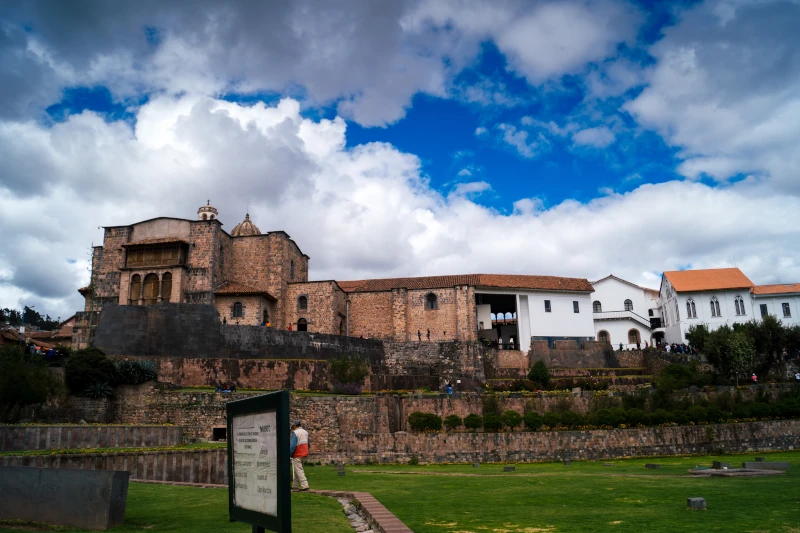
The Spanish Conquistadors arrived in the 16th century. They were awestruck by the temple’s wealth. This wealth became their target. They looted the gold and dismantled the temple. A Catholic Church, Santo Domingo, was built in its place.

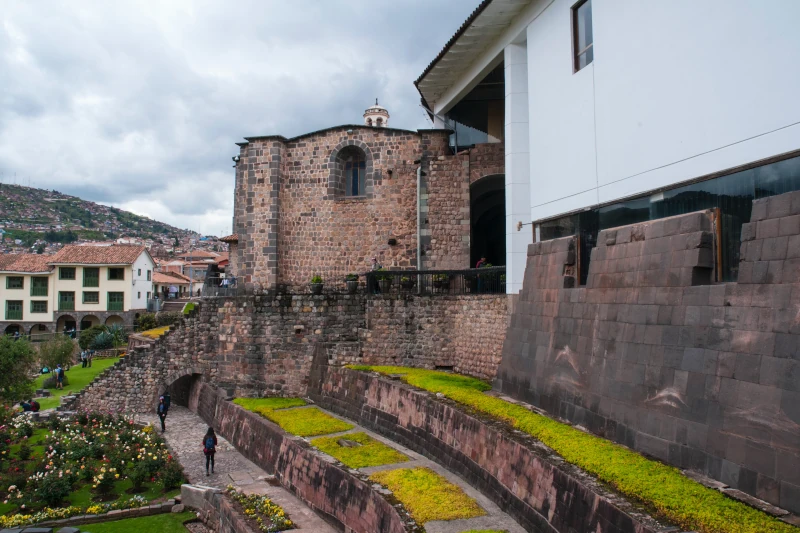
However, parts of the original temple survived. Inca walls are still visible at the base of the church. Despite the cultural invasion, the Inca legacy endured. Qorikancha still stands as a symbol of Inca greatness. Its history remains etched in the heart of Cusco city.

Understanding Qorikancha’s history is vital. It offers a glimpse into the Inca Empire’s past. It’s a testament to the Inca’s architectural genius. Most importantly, it reflects their deep reverence for nature and the divine. 

Today, Qorikancha is a historical site. Tourists flock to see its remaining grandeur. As they stand among its walls, they are transported back to a time of gold and gods.

Qorikancha: Exploring Cusco's Golden Temple

Stone upon stone: Investigating Qorikancha’s unique architectural brilliance

Qorikancha’s architectural brilliance is undeniably remarkable. The Incas were known for their stone masonry skills. Qorikancha stands as a testament to that skill.

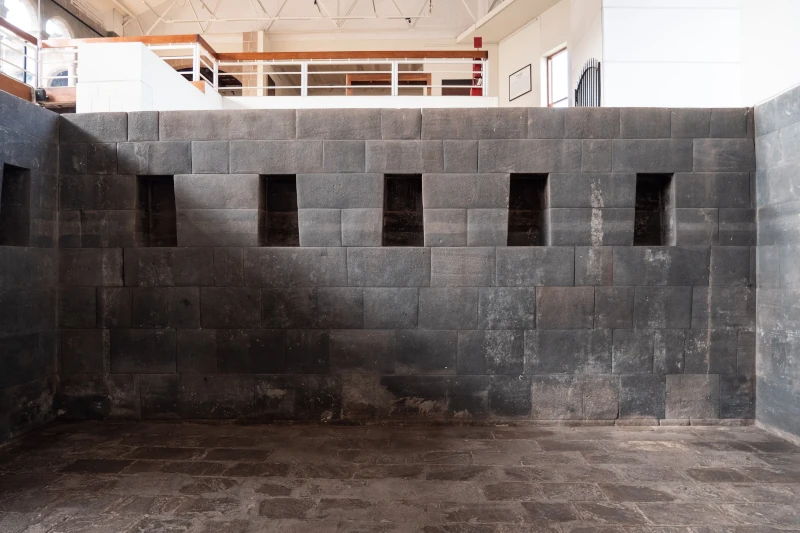
The temple was constructed with andesite stone. The stones were sourced from quarries near the Sacred Valley of the Incas. Thus, every stone was finely cut and shaped. No mortar was used in the construction.

This technique is known as Ashlar masonry. Each stone was so perfectly fit with the next. You can’t even fit a razor blade between them. This precision is astonishing even today.

The layout of the temple also reflects the Inca’s astronomical knowledge. The temple was aligned with the sun during solstices. This showcased their deep understanding of celestial bodies. 

Qorikancha’s architecture was not just for aesthetics. It had practical benefits too. The precision of their masonry made the temple earthquake-resistant. Cusco has suffered many earthquakes over centuries. Yet, Qorikancha’s walls have largely remained intact.

When the Spanish built the Santo Domingo Church, they used the Inca walls as the foundation. The church was severely damaged during earthquakes. But the Inca walls stood firm. This further highlights the Inca’s superior engineering skills.

Despite the plunder and destruction, Qorikancha’s remnants are remarkable. The existing walls still exhibit their original grandeur. This grandeur is a silent tribute to Inca ingenuity.

Today, Qorikancha serves as a reminder of the architectural prowess of the Incas. Its brilliant stonework continues to inspire and awe. It’s an integral part of the rich architectural tapestry of Peru. The temple remains a beacon of past civilizations, silently echoing through the corridors of time.

Qorikancha: Exploring Cusco's Golden Temple

A testament to cultural resilience: Qorikancha’s impact on Peruvian history and identity

Qorikancha is more than a historical relic. It’s a symbol of cultural resilience. It’s woven into the fabric of Peruvian history and identity.

Despite the Spanish conquest, Qorikancha’s legacy persisted. It became a silent yet powerful symbol of resistance. The Incas may have lost their temple, but not their cultural essence. 

When the Spaniards built the Santo Domingo Church, it marked the beginning of cultural fusion. The church standing on the Inca walls symbolizes this amalgamation. This blend of cultures still defines modern Peru.

Qorikancha’s influence extends beyond architecture. It has shaped religious practices too. The temple served as the epicenter of Inca religious rituals. Many of these traditions still survive in Peru.

Annually, Cusco celebrates Inti Raymi, the Festival of the Sun. It’s a reenactment of the Inca’s winter solstice celebration. Qorikancha is the starting point of this vibrant event. 

Even in its current form, Qorikancha continues to inspire. It reminds Peruvians of their resilient ancestors. It serves as a bridge, connecting the past with the present. 

Today, Qorikancha is not just a tourist destination. It’s a pilgrimage for those seeking their roots. It helps Peruvians understand their cultural lineage.

In the end, Qorikancha stands as a beacon of cultural resilience. It’s a silent testament to Peru’s rich past and evolving identity. 

If you visit Cusco, don’t miss Qorikancha. Also, venture out to the breathtaking Vinicunca Rainbow Mountain or Palccoyo Rainbow Mountain. Embrace the enchanting blend of natural and cultural heritage that is Peru.

Qorikancha: Exploring Cusco's Golden Temple

Why Book With Us?

  • No-hassle best price guarantee
  • Customer care available 24/7
  • Hand-picked Tours & Activities
  • Expert Local Guides

Got a Question?

Do not hesitate to give us a call. We are an expert team and we are happy to talk to you.

+51-966 719 040

+51-986 826 782

[email protected]