Qeswachaka Rope Bridge – Peru

Perched high above the swirling currents of the Apurimac River in the southern Andes of Peru, the Qeswachaka Rope Bridge offers more than just a heart-pounding crossing; it is a living testament to an ancient Inca tradition that has endured for over five centuries. This handwoven marvel, the last of its kind, merges engineering genius with cultural heritage, standing as a symbol of community unity and the indomitable spirit of the indigenous Quechua peoples. 

In this article, we’ll journey to the remote reaches of the Andean highlands to explore the rich history, exquisite craftsmanship, and unique annual rebuilding ceremony of the Qeswachaka Rope Bridge, an astonishing relic of the Inca Empire and an awe-inspiring testament to human ingenuity.

The legacy of the Inca: Origins and history of the Qeswachaka Rope Bridge

The Qeswachaka Rope Bridge is a lasting artifact of the mighty Inca Empire. Known as the last Inca bridge, it whispers tales from centuries past. Its origins date back to the era when Machu Picchu was a vibrant city, around the 15th century. 

During their reign, the Incas developed an extensive road network. This spread from modern-day Ecuador to Chile. The system connected the heart of the empire, Cusco city, with far-flung regions. In this network, rope bridges held a vital role. 

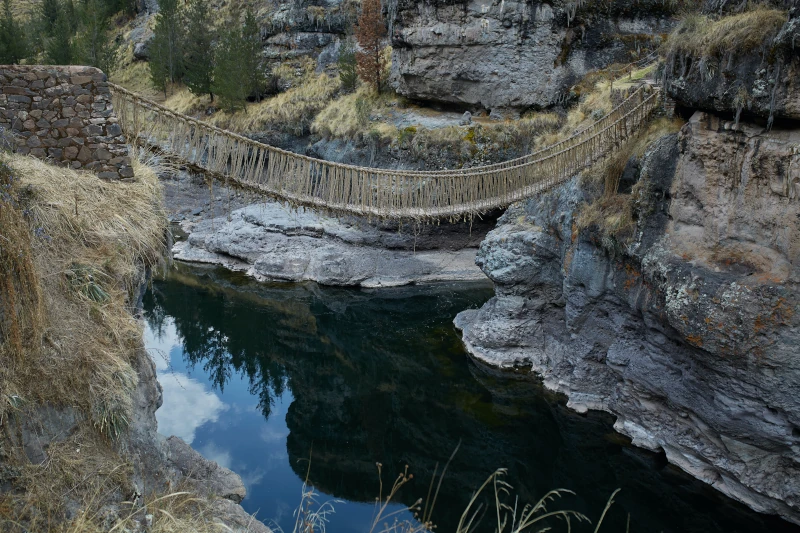
Engineered for difficult terrains, these bridges were lifelines. They spanned over gorges, rivers, and chasms, aiding communication and transport. Qeswachaka is a shining example of this feat. It still hangs over the Apurimac River, 60 feet in length and 5 feet wide. 

Constructed from grass, Qeswachaka is rebuilt annually in a community ceremony. This practice preserves the Inca traditions and skills, alive for more than 500 years. The bridge stands as a symbol of continuity, from the Incas to the present day.

Interestingly, Qeswachaka wasn’t discovered by Western world until the late 19th century. It remained a local secret, shrouded in Andean mists. Today, it attracts tourists and history enthusiasts. Yet, its true beauty lies in its cultural significance to the local Quechua people.

The legacy of the Inca is profound. From Machu Picchu to Qeswachaka, we see signs of their engineering prowess. These cultural treasures, including Qeswachaka, reveal the resourcefulness and tenacity of the Incas. Thus, they bring the past to life, linking modern Peru to its rich heritage.

Qeswachaka Rope Bridge – Peru

Understanding the unique construction and maintenance of Qeswachaka

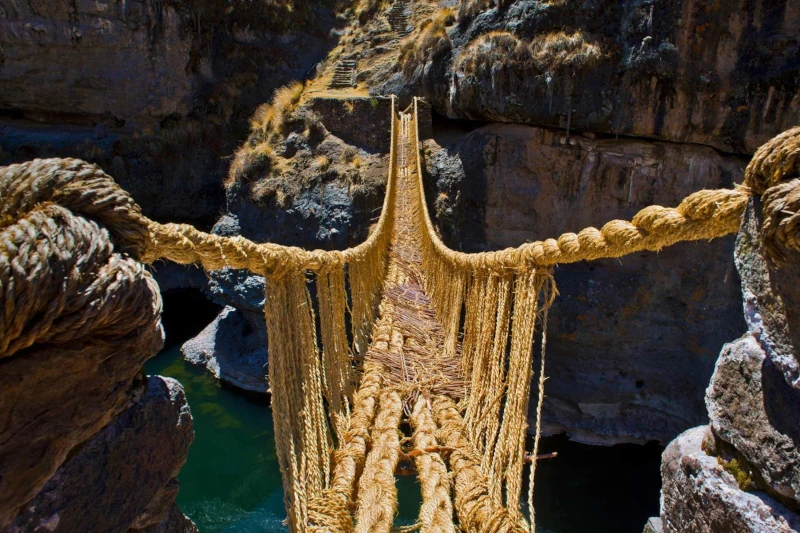
The Qeswachaka Rope Bridge is an embodiment of traditional engineering ingenuity. Its design and construction method are simple, yet effective. Made entirely from ichu grass, it stands suspended over the treacherous Apurimac River. 

This construction material, commonly found in the Andean highlands, is known for its robustness. Locals gather it from the high plains near the Sacred Valley. The harvested grass is then dried and woven into long cords. These cords are twisted together to form strong ropes. 

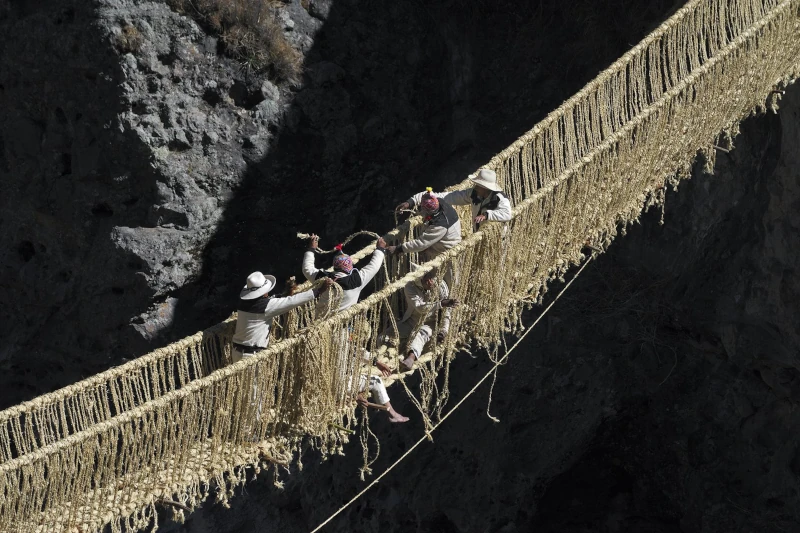
Furthermore, building Qeswachaka is an intricate and laborious task. It involves the entire community, a collective endeavor deeply rooted in tradition. It starts by securing sturdy stone abutments on either bank of the river. 

Four main cables are made by twisting several ropes together. Two of these cables serve as the floor of the bridge. The other two, slightly higher, work as handrails. Then, smaller ropes are woven horizontally to connect these cables, creating a secure pathway. 

Additionally, each year, the bridge is completely rebuilt, ensuring its safety and structural integrity.  This annual ritual is a community event, thus everyone participates. It’s a celebration of heritage, filled with music, dance, and traditional foods. 

Qeswachaka Rope Bridge is a masterpiece. It represents an unparalleled adaptation to the local environment. Nestled in the heart of the Andes, it mirrors the Inca spirit, resilience, and ingenuity. Thus, Qeswachaka stands tall, a testament to the deep cultural knowledge of the indigenous Andean people.

Qeswachaka Rope Bridge – Peru

The bridge of renewal: The annual rebuilding ceremony and its cultural significance

Each year, the Qeswachaka Rope Bridge comes alive with tradition, heritage, and community spirit. The rebuilding ceremony is the heart of this experience. This ritual holds profound cultural significance for the local Quechua people. 

For them, it’s not just a maintenance task. It’s a vital rite that reinforces community ties and honors ancestral wisdom. This three-day event takes place every June. It gathers families from surrounding communities for a celebration of heritage.

People play different roles during the ceremony. The men weave the ropes, while women prepare food and offer support. This division reflects traditional gender roles in Quechua society. The whole process is overseen by a master bridge builder. 

The rebuilding of Qeswachaka is a vibrant spectacle. It’s filled with singing, dancing, and communal feasts. It concludes with a ceremonial crossing. The locals, adorned in traditional costumes, cross the bridge together. 

Participating in this event is an immersive cultural experience. It offers a glimpse into the rich Quechuan culture, largely unchanged for centuries. If you are visiting Peru, it’s a unique opportunity you shouldn’t miss. 

In fact, why not extend your journey of discovery? Consider a Machu Picchu Day Trip from Cusco. Explore the renowned Inca city and witness the splendors of the past. Or, undertake a Vinicunca Rainbow Mountain Tour. This geological wonder, painted in vivid hues, is a must-visit site. 

In Peru, every turn reveals a blend of history, culture, and nature. From Qeswachaka’s renewal to exploring Machu Picchu, these experiences are truly unforgettable. Embark on these journeys and uncover the fascinating facets of Peru’s rich heritage.

Qeswachaka Rope Bridge – Peru

Why Book With Us?

  • No-hassle best price guarantee
  • Customer care available 24/7
  • Hand-picked Tours & Activities
  • Expert Local Guides

Got a Question?

Do not hesitate to give us a call. We are an expert team and we are happy to talk to you.

+51-966 719 040

+51-986 826 782

[email protected]