Peru, a land steeped in ancient history and vibrant culture, has long been known for its iconic Inca ruins of Machu Picchu. This UNESCO World Heritage site, perched on a mountaintop, enthralls millions of visitors every year with its mystic allure. But today, we’re venturing off the well-trodden path to explore another archaeological gem that is slowly garnering international attention – Waqrapukara.
Often overshadowed by the fame of Machu Picchu, this lesser-known Inca sanctuary has a distinct character and grandeur that might make even the most seasoned travelers question: Could Waqrapukara be more spectacular than Machu Picchu? In this article, we’ll delve into the mysteries, architectural marvels, and unmatched tranquility of this hidden gem. Thus, we will offer a compelling case for why Waqrapukara might just be Peru’s next must-see destination.
Nestled high in the Southern Andes of Peru, lies a hidden gem: Waqrapukara. Far removed from the tourist trodden paths of Cusco city, it exudes an aura of tranquility and mystery. This little-known archaeological site embodies the profound heritage of ancient Inca civilization.
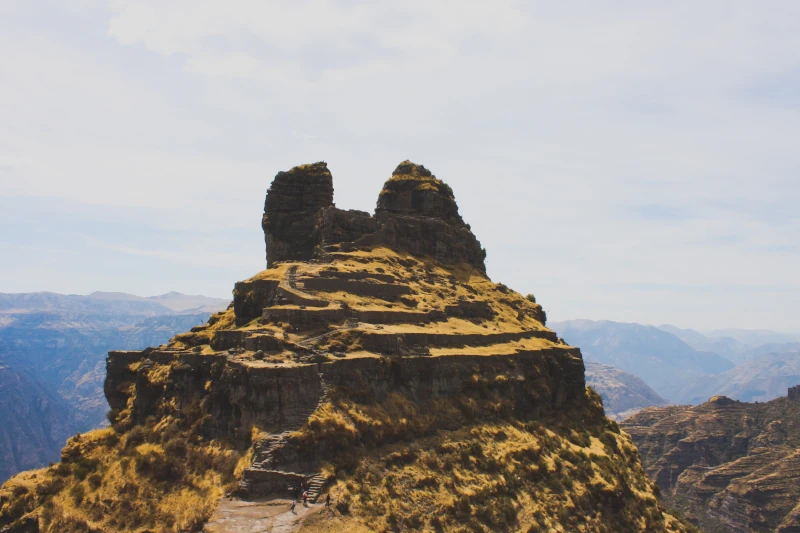
Dating back to the 15th century, Waqrapukara served as an important ceremonial center. Its name, in the native Quechua language, translates to ‘Horn-Shaped Fortress.’ Its origins, like much of Inca history, are shrouded in enigma.
Unlike the famed Machu Picchu or the bustling Sacred Valley, Waqrapukara is relatively unexplored. This brings a sense of authenticity that avid adventurers crave. Its remote location makes it an exclusive experience, undisturbed by large crowds.
The journey to Waqrapukara is a significant part of the allure. It involves a challenging trek through captivating landscapes. The path weaves through traditional Andean villages, offering glimpses into local life and culture.
Upon reaching the site, the vista of the Apurimac River below is stunning. The meticulously carved stones of Waqrapukara contrast beautifully against the rugged backdrop of the Andes. The experience is raw and untouched, offering a glimpse into the world of the Incas.
Visiting Waqrapukara requires effort, but the reward is immeasurable. Its beauty lies in its solitude, silence, and unspoiled setting. It stands as a testament to Inca architectural mastery, hidden amidst the breathtaking panorama.
Undeniably, Waqrapukara is a treasure waiting to be discovered. A visit here promises not just an archaeological exploration, but a journey into Peru’s rich past. The hidden gem of the Andes beckons, ready to unveil its secrets.

Waqrapukara, perched high in the Andean mountains, is an ode to Inca architectural genius. The stone fortress stands stark against the vast Peruvian sky, a testament to ancient mastery. Its structure resembles that of an Andean animal, hence its Quechua name: ‘Horn-Shaped Fortress.’
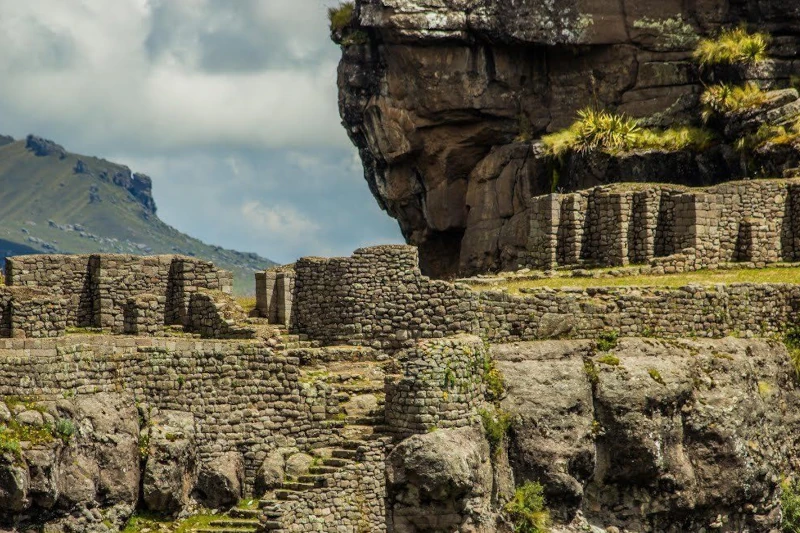
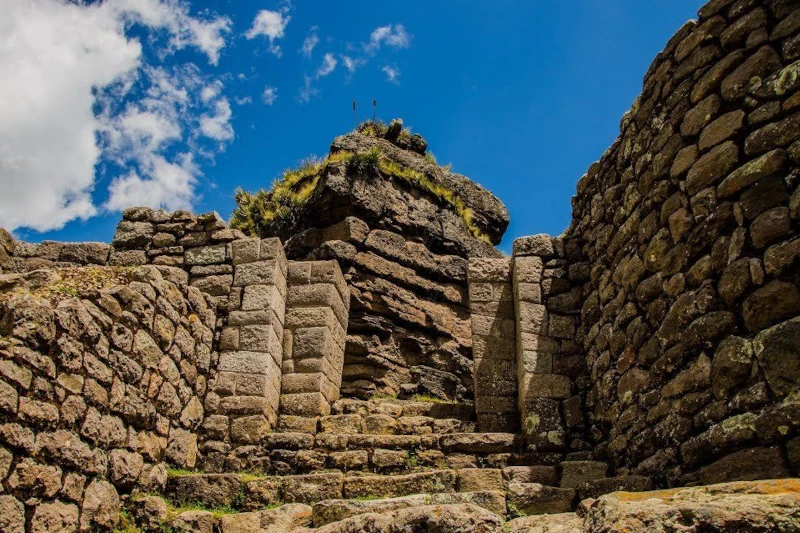
Waqrapukara’s architecture exhibits the Incas’ skilled masonry. The precision and technique employed are similar to those at Qorikancha, the revered Temple of the Sun. The fortress’s main feature is its dual platform, elevated on stone terraces. This provides a panoramic view of the Apurimac River and the canyon below.
The edifice is built using large polished stone slabs. These are fitted together seamlessly, without the use of mortar. This technique, called ashlar, was characteristic of Inca architecture. It lent structural stability, enabling buildings to withstand earthquakes.
The fortress also showcases the Incas’ understanding of astronomy. Many structures align with celestial bodies during solstices, indicating their significance in Inca culture. For instance, the main entrance to Waqrapukara aligns with the rising sun during the winter solstice.
Around the fortress are numerous smaller structures and terraces. These were likely used for agricultural purposes and habitation. They showcase the Incas’ ability to adapt their architecture to the rugged Andean landscape.
Waqrapukara may lack the fame of Machu Picchu, but its architectural prowess is undeniable. It stands as a tangible link to a civilization that understood the sky, the earth, and the stone. This stone fortress against the sky is a silent witness to Inca brilliance, inviting explorers to decipher its architectural secrets.

Machu Picchu, an architectural marvel perched high in the Andes, has long been a symbol of Peru’s rich history. Its iconic terraces and temples lure millions of visitors each year. Yet, another site, Waqrapukara, is beginning to capture global attention.
Unlike Machu Picchu, Waqrapukara is not easily accessible. The challenging trek to this fortress contributes to its mystery and appeal. In contrast, Machu Picchu, accessible by train and bus, receives larger crowds.
Architecturally, both sites demonstrate the Incas’ mastery of stonework. But the nature of the sites varies. While Machu Picchu was a royal estate, Waqrapukara served as a ceremonial center.
The sense of solitude at Waqrapukara offers a stark contrast to the bustling atmosphere of Machu Picchu. Waqrapukara’s lack of tourist throngs allows for a more contemplative exploration.
At Machu Picchu, one can admire Inca craftsmanship amidst cloud forests. At Waqrapukara, one witnesses the fortress’s stark beauty against the backdrop of the Apurimac River.
Machu Picchu’s global fame is undoubted. Yet, the allure of Waqrapukara lies in its relative obscurity and tranquility. Each site, unique and captivating, offers a different perspective on Inca civilization.
While in the region, consider exploring more of Peru’s diverse landscape. Embark on a Palccoyo or Vinicunca Rainbow Mountain tour. These stunning geological formations offer breathtaking panoramic views.
Ultimately, choosing between Machu Picchu and Waqrapukara depends on what you seek. If it’s solitude, mystery, and a challenging journey, then Waqrapukara awaits. If it’s architectural grandeur amidst lush landscapes, then Machu Picchu calls.

Do not hesitate to give us a call. We are an expert team and we are happy to talk to you.